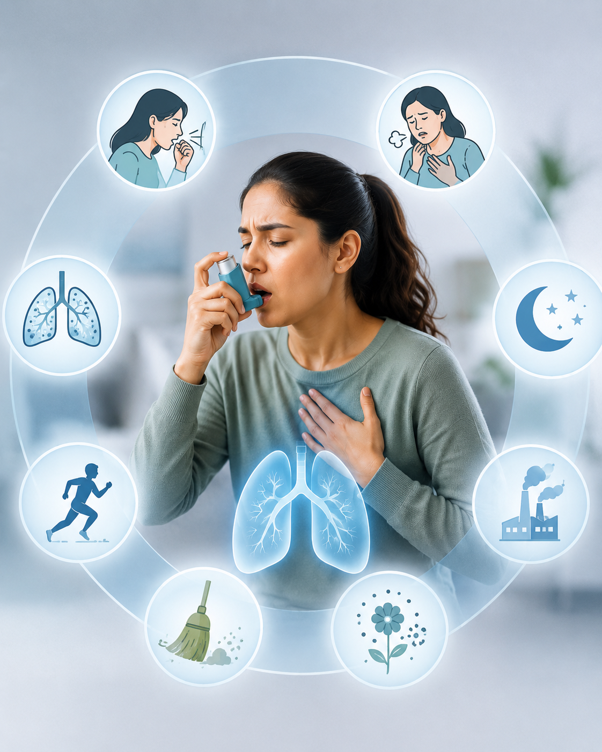
Early Warning Signs of Asthma You Should Know
Imagine climbing a flight of stairs that you’ve climbed countless times before. Suddenly, you find yourself short of breath. Later that night, a persistent cough keeps you awake. You dismiss it as fatigue, changing weather, or seasonal allergies. But what if these seemingly minor symptoms are actually early signs of asthma?
Asthma is one of the most common chronic respiratory conditions, affecting people of all ages. While it cannot be completely cured, it can be effectively managed with early diagnosis, proper treatment, and lifestyle changes. Recognizing the warning signs early can help prevent severe asthma attacks and improve your quality of life.
At Ashraya Superspeciality Hospital, our experienced pulmonologists provide comprehensive diagnosis and personalized asthma care, helping patients breathe easier and live healthier lives.
What Is Asthma?
Asthma is a chronic condition that causes inflammation and narrowing of the airways, making it difficult for air to move freely in and out of the lungs. The symptoms may come and go, and their severity can vary from person to person. Some people experience mild symptoms occasionally, while others may have frequent flare-ups that require immediate medical attention.
With proper treatment and regular follow-ups, most people with asthma can lead active and healthy lives.
Early Warning Signs of Asthma
Many people mistake the early symptoms of asthma for a common cold or seasonal allergies. However, paying attention to these signs can help you seek treatment before the condition worsens.
Frequent Coughing
A cough that occurs repeatedly, especially at night, early in the morning, or after exercise, can be an early sign of asthma. Unlike a regular cough caused by a viral infection, asthma-related coughing often returns even after other symptoms have disappeared.
Wheezing
A whistling or squeaky sound while breathing is one of the most recognizable symptoms of asthma. Wheezing usually occurs because the airways become narrowed and inflamed.
Shortness of Breath
Feeling breathless after minimal physical activity or struggling to catch your breath during routine tasks should not be ignored. This may indicate that your airways are becoming restricted.
Chest Tightness
Many people with asthma describe a feeling of pressure, heaviness, or tightness in the chest. This sensation can range from mild discomfort to significant difficulty in breathing.
Difficulty Sleeping
Night-time asthma symptoms such as coughing, wheezing, or breathlessness can disturb sleep and leave you feeling tired during the day. Frequent night symptoms often indicate that asthma is not well controlled.
Fatigue
When breathing becomes difficult, your body uses more energy to perform everyday activities. This can result in unusual tiredness and reduced stamina.
Common Asthma Triggers
Asthma symptoms often worsen after exposure to specific triggers. Common triggers include dust, pollen, smoke, air pollution, pet dander, strong perfumes, cold air, respiratory infections, exercise, and stress. Identifying and avoiding personal triggers plays an important role in managing asthma effectively.
Who Is at Higher Risk?
Anyone can develop asthma, but certain factors increase the risk. Individuals with a family history of asthma or allergies, smokers, people exposed to pollution or workplace chemicals, and those with frequent respiratory infections are more likely to develop the condition. Children and older adults may also be more vulnerable.
When Should You See a Doctor?
If you experience frequent coughing, wheezing, chest tightness, or shortness of breath that keeps returning, it is important to seek medical advice. Delaying treatment may increase the risk of severe asthma attacks and long-term lung damage. Early diagnosis allows doctors to create a personalized treatment plan that keeps symptoms under control.
How Is Asthma Diagnosed?
At Ashraya Superspeciality Hospital, asthma diagnosis begins with understanding your symptoms and medical history. Depending on your condition, your doctor may recommend a physical examination, lung function tests, allergy evaluation, chest imaging, or other diagnostic investigations. Accurate diagnosis ensures that you receive the most effective treatment for your specific needs.
Managing Asthma Effectively
Although asthma is a lifelong condition, it can be managed successfully. Treatment usually includes inhalers to reduce airway inflammation, medications to relieve symptoms, avoiding known triggers, maintaining a healthy lifestyle, and attending regular medical follow-ups. Following your doctor’s treatment plan can significantly reduce asthma attacks and improve your quality of life.
Why Choose Ashraya Superspeciality Hospital?
Ashraya Superspeciality Hospital provides comprehensive respiratory care through experienced specialists, advanced diagnostic facilities, modern laboratory services, and personalized treatment plans. Conveniently located near Marunji and Hinjewadi, Pune, we are committed to delivering compassionate, evidence-based healthcare for patients of all ages.
Conclusion
Recognizing the early warning signs of asthma can make a significant difference in preventing complications and improving your quality of life. If you experience recurring cough, wheezing, or shortness of breath, don’t ignore these symptoms. Early diagnosis and timely treatment can help you breathe easier and stay healthier.
For Expert Asthma Care Consultation
Ashraya Superspeciality Hospital
Address: Ashraya Hospital, Near Jadhav Petrol Pump, Nere-Dattawadi, Tal. Mulshi, Marunji, Pune, Maharashtra – 411033
Phone: +91 84848 86080
If you or a loved one is experiencing symptoms of asthma, schedule a consultation with our specialists for accurate diagnosis and personalized treatment.
Recent Posts
-
 World Heart Day: Know the Warning Signs of Heart Problems Before They Become an Emergency
 -
 Post-Monsoon Respiratory Infections: Why September Can Trigger Cough, Cold and Breathing Problems
 -
 Menopause: Managing Symptoms for Better Quality of Life
 -
 Pregnancy Care: Important Health Checkups in Every Trimester
 -
 Irregular Periods: When Should You Be Concerned?