PCOS: Early Symptoms Every Woman Should Know
Imagine missing your period for months, noticing sudden weight gain, or struggling with persistent acne that doesn’t improve despite skincare treatments. You might assume it’s caused by stress or hormonal changes, but these symptoms could be early signs of Polycystic Ovary Syndrome (PCOS).
PCOS is one of the most common hormonal disorders affecting women of reproductive age. It can influence menstrual health, fertility, metabolism, and overall well-being. The good news is that with early diagnosis, appropriate treatment, and healthy lifestyle changes, most women with PCOS can successfully manage their symptoms and lead healthy lives.
At Ashraya Superspeciality Hospital, our experienced gynecologists provide comprehensive evaluation and personalized care to diagnose PCOS early and help women achieve better hormonal and reproductive health.
What Is PCOS?
Polycystic Ovary Syndrome (PCOS) is a hormonal condition that affects how the ovaries function. Women with PCOS often produce higher-than-normal levels of androgens, commonly known as male hormones. This hormonal imbalance can interfere with regular ovulation, leading to irregular menstrual cycles and other health concerns.
Despite its name, not every woman with PCOS develops ovarian cysts. The condition is diagnosed based on a combination of symptoms, hormonal changes, and ultrasound findings.
If left untreated, PCOS may increase the risk of infertility, diabetes, high blood pressure, and other long-term health problems.
Early Symptoms of PCOS
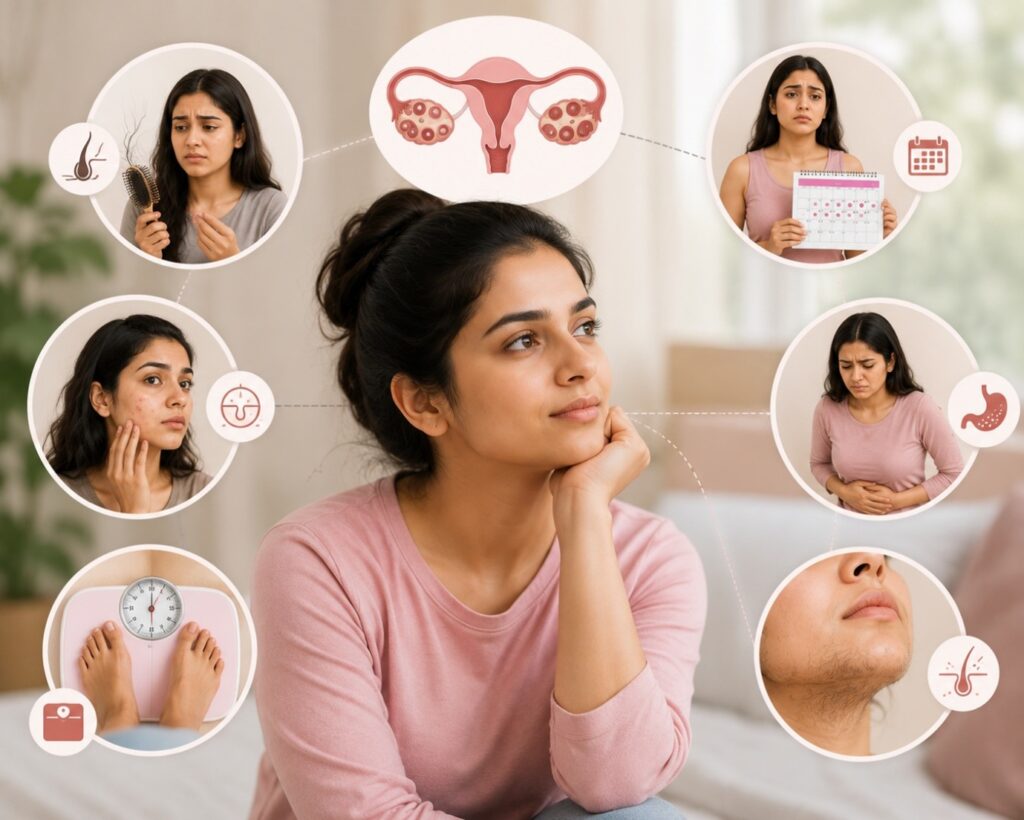
The symptoms of PCOS vary from woman to woman, but they often begin during the teenage years or early adulthood. One of the earliest and most common signs is irregular or missed periods, caused by infrequent or absent ovulation.
Many women also experience persistent acne, particularly on the face, chest, or back, due to increased androgen levels. Another common symptom is excessive hair growth on the face, chin, chest, or abdomen, a condition known as hirsutism.
Some women notice weight gain, especially around the abdomen, even without significant changes in their diet or activity level. Thinning hair or hair loss from the scalp may also occur due to hormonal imbalance.
Difficulty becoming pregnant, darkened patches of skin around the neck or underarms, and oily skin are additional signs that may indicate PCOS.
What Causes PCOS?
The exact cause of PCOS is not fully understood, but several factors are believed to contribute to its development. Genetics play an important role, as women with a family history of PCOS are more likely to develop the condition.
Insulin resistance, where the body’s cells do not respond effectively to insulin, is another major factor. This can lead to higher insulin levels, which stimulate the ovaries to produce more androgens.
Hormonal imbalances and low-grade inflammation may also contribute to the development of PCOS. Although lifestyle factors do not directly cause PCOS, maintaining an unhealthy weight can worsen symptoms.
Who Is at Higher Risk?
PCOS can affect any woman of reproductive age, but certain factors increase the risk. Women with a family history of PCOS, obesity, insulin resistance, or type 2 diabetes are more likely to develop the condition.
Those who experience early menstrual irregularities, persistent acne, or excessive hair growth should also consider medical evaluation, particularly if these symptoms continue over time.
When Should You See a Gynecologist?
You should consult a doctor if your menstrual cycles are consistently irregular, if you miss multiple periods without pregnancy, or if you experience excessive facial hair growth, persistent acne, or unexplained weight gain.
Medical advice is also important if you are planning a pregnancy but are having difficulty conceiving. Early diagnosis can help manage symptoms, improve fertility, and reduce the risk of long-term complications.
How Is PCOS Diagnosed?
At Ashraya Superspeciality Hospital, diagnosis begins with a detailed discussion of your menstrual history, symptoms, and medical background. Your gynecologist may perform a physical examination and recommend additional investigations to confirm the diagnosis.
These investigations may include blood tests to evaluate hormone levels, blood sugar, and thyroid function, along with a pelvic ultrasound to examine the ovaries and reproductive organs.
Our advanced diagnostic facilities help ensure accurate diagnosis and personalized treatment planning.
Treatment Options
Although PCOS cannot be permanently cured, its symptoms can be effectively managed. Treatment depends on your symptoms, age, and future pregnancy plans.
Lifestyle changes such as maintaining a healthy body weight, exercising regularly, and following a balanced diet often improve hormone balance and menstrual regularity. Medications may be prescribed to regulate periods, manage insulin resistance, reduce acne, or control excessive hair growth.
Women planning pregnancy may receive fertility treatments to support ovulation. Regular follow-up appointments help monitor progress and reduce the risk of long-term health complications.
Tips to Manage PCOS Naturally
Healthy lifestyle habits play an important role in managing PCOS. Maintaining a balanced diet rich in whole grains, lean proteins, fruits, and vegetables can help improve insulin sensitivity. Regular physical activity, adequate sleep, stress management, and maintaining a healthy weight can also reduce symptoms and improve overall health.
Tracking your menstrual cycle and attending routine gynecological check-ups can help detect changes early and ensure timely treatment.
Why Choose Ashraya Superspeciality Hospital?
Ashraya Superspeciality Hospital offers comprehensive women’s healthcare through experienced gynecologists, advanced diagnostic facilities, modern laboratory services, and personalized treatment plans. Our patient-centered approach focuses on early diagnosis, effective treatment, and long-term management to support women’s reproductive and hormonal health.
Conveniently located near Marunji and Hinjewadi, Pune, we are committed to providing compassionate, evidence-based care for women at every stage of life.
Conclusion
PCOS is a common but manageable condition when diagnosed early. Recognizing the warning signs and seeking timely medical care can help regulate your menstrual cycle, improve fertility, and reduce the risk of future health complications. If you notice persistent symptoms, consult a gynecologist for expert evaluation and personalized treatment.
For Expert Women’s Health Consultation
Ashraya Superspeciality Hospital
Address: Ashraya Hospital, Near Jadhav Petrol Pump, Nere-Dattawadi, Tal. Mulshi, Marunji, Pune, Maharashtra – 411033
Phone: +91 84848 86080
If you or a loved one is experiencing symptoms of PCOS, schedule a consultation with our gynecology specialists for accurate diagnosis and personalized care.
Recent Posts
-
 World Heart Day: Know the Warning Signs of Heart Problems Before They Become an Emergency
 -
 Post-Monsoon Respiratory Infections: Why September Can Trigger Cough, Cold and Breathing Problems
 -
 Menopause: Managing Symptoms for Better Quality of Life
 -
 Pregnancy Care: Important Health Checkups in Every Trimester
 -
 Irregular Periods: When Should You Be Concerned?