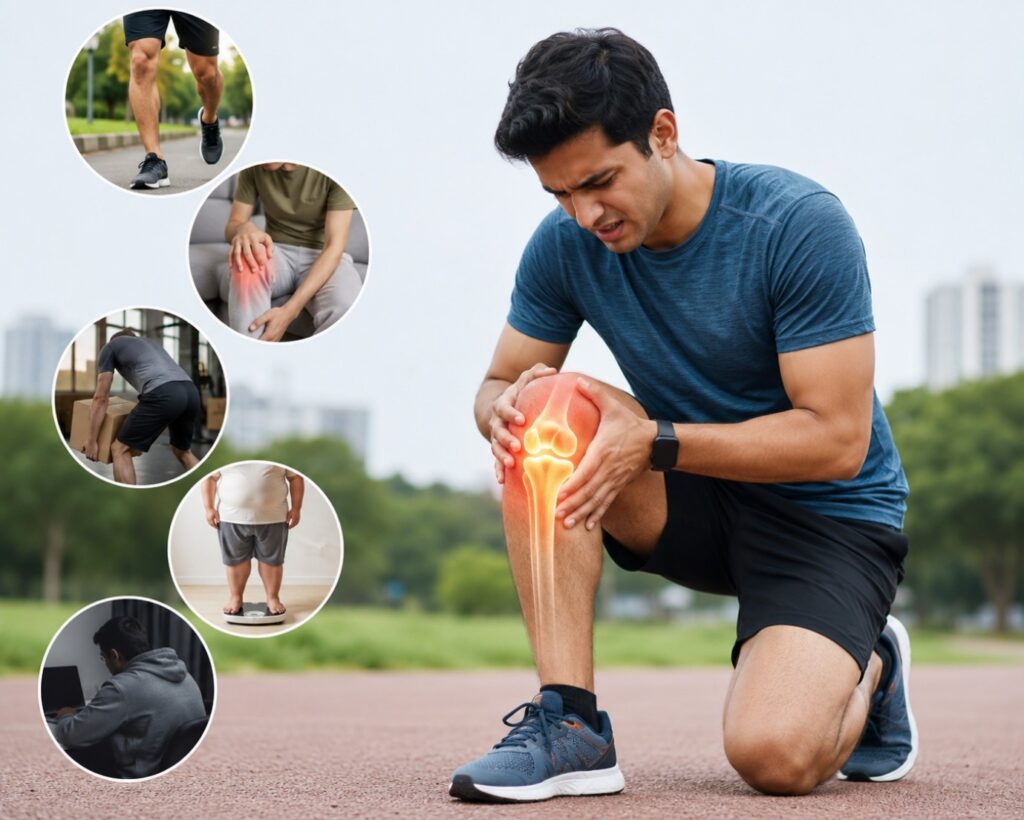
Common Causes of Knee Pain in Young Adults
Imagine you’re climbing the stairs after a long day or heading out for your usual workout when you suddenly feel pain in your knee. At first, you assume it’s just a minor strain that will go away with rest. But days pass, and the discomfort persists, making simple activities like walking, squatting, or exercising increasingly difficult.
Many people believe knee pain only affects older adults, but that’s far from the truth. Young adults frequently experience knee pain due to sports injuries, overuse, poor posture, or underlying medical conditions. Ignoring persistent knee pain can lead to long-term joint problems and reduced mobility.
At Ashraya Superspeciality Hospital, our experienced orthopedic specialists provide accurate diagnosis and personalized treatment to help patients recover from knee pain and return to their active lifestyles.
Why Does Knee Pain Occur?
The knee is one of the largest and most complex joints in the body. It supports your body weight while allowing movements such as walking, running, jumping, and climbing stairs. Because it is used constantly, the knee is vulnerable to injuries and wear caused by repetitive movement or excessive strain.
Pain may develop suddenly after an injury or gradually over time due to overuse or underlying health conditions. Identifying the exact cause is essential for effective treatment and preventing further damage.
Common Causes of Knee Pain in Young Adults
One of the most common causes is sports-related injuries. Activities such as football, cricket, badminton, running, and gym workouts can lead to ligament sprains, meniscus tears, or tendon injuries if proper precautions are not taken.
Overuse injuries are another frequent cause. Repeated stress on the knee from running, cycling, jumping, or prolonged standing can irritate the tendons and surrounding tissues, leading to pain and inflammation.
Patellofemoral Pain Syndrome, often called “runner’s knee,” is common among young adults who regularly participate in sports or fitness activities. It causes pain around or behind the kneecap, especially while climbing stairs, squatting, or sitting for long periods.
Poor posture, improper exercise techniques, weak thigh muscles, obesity, and wearing unsuitable footwear can also place additional stress on the knee joint and contribute to chronic discomfort.
In some cases, inflammatory conditions such as rheumatoid arthritis, gout, or infections may cause knee pain, even in younger individuals.
Common Symptoms to Watch For
The symptoms of knee pain vary depending on the underlying cause. Many people experience pain while walking, running, climbing stairs, or bending the knee. Others notice swelling, stiffness, warmth, or tenderness around the joint.
Some individuals hear clicking or popping sounds when moving the knee, while others feel that the knee locks, gives way, or becomes unstable. Reduced flexibility and difficulty performing everyday activities are also common signs that should not be ignored.
If pain persists despite rest or gradually becomes worse, medical evaluation is recommended.
When Should You See a Doctor?
Occasional soreness after exercise usually improves within a few days. However, you should seek medical attention if knee pain lasts for more than a week, becomes severe, or prevents you from walking normally.
Immediate medical evaluation is necessary if the knee becomes significantly swollen, cannot bear weight, appears deformed after an injury, or is associated with fever, redness, or severe pain. Early diagnosis can help prevent permanent joint damage and speed up recovery.
How Is Knee Pain Diagnosed?
At Ashraya Superspeciality Hospital, diagnosis begins with a detailed discussion of your symptoms, activity level, medical history, and any recent injuries. Your doctor will carefully examine the knee to assess movement, stability, swelling, and tenderness.
Depending on your condition, diagnostic tests such as X-rays, MRI scans, ultrasound, CT scans, or laboratory investigations may be recommended to identify ligament injuries, cartilage damage, fractures, or inflammatory conditions.
Our advanced diagnostic facilities ensure accurate diagnosis and personalized treatment planning.
Treatment Options
Treatment depends on the underlying cause and severity of the knee pain. Mild injuries often improve with rest, ice application, compression, elevation, pain-relieving medications, and physiotherapy.
Structured rehabilitation exercises help strengthen the muscles supporting the knee, improve flexibility, and reduce the risk of future injuries. Patients with ligament tears, cartilage injuries, or severe joint damage may require minimally invasive arthroscopic surgery or other orthopedic procedures.
Lifestyle modifications, weight management, proper footwear, and correcting exercise techniques are also important parts of long-term recovery.
How Can You Prevent Knee Pain?
Many cases of knee pain can be prevented by maintaining strong muscles around the knees, warming up before exercise, and using proper techniques during sports and workouts. Wearing supportive footwear, maintaining a healthy body weight, and avoiding sudden increases in training intensity can also reduce the risk of injury.
Listening to your body is equally important. If pain develops during physical activity, avoid pushing through the discomfort and seek medical advice if symptoms persist.
Why Choose Ashraya Superspeciality Hospital?
Ashraya Superspeciality Hospital provides comprehensive orthopedic care through experienced specialists, advanced diagnostic facilities, modern laboratory services, and personalized treatment plans. Our patient-centered approach focuses on identifying the root cause of knee pain and delivering effective treatment that restores mobility and supports long-term joint health.
Conveniently located near Marunji and Hinjewadi, Pune, we are committed to providing compassionate, evidence-based healthcare for patients of all ages.
Conclusion
Knee pain is not limited to older adults. In young adults, it often results from injuries, overuse, or underlying joint conditions that can be effectively treated when diagnosed early. If knee pain is affecting your daily activities or exercise routine, don’t ignore it. Timely medical evaluation can help you recover faster and prevent future complications.
For Expert Consultation
Ashraya Superspeciality Hospital
Address: Ashraya Hospital, Near Jadhav Petrol Pump, Nere-Dattawadi, Tal. Mulshi, Marunji, Pune, Maharashtra – 411033
Phone: +91 84848 86080
If you or a loved one is experiencing persistent knee pain, schedule a consultation with our orthopedic specialists for accurate diagnosis and personalized treatment.
Recent Posts
-
 World Heart Day: Know the Warning Signs of Heart Problems Before They Become an Emergency
 -
 Post-Monsoon Respiratory Infections: Why September Can Trigger Cough, Cold and Breathing Problems
 -
 Menopause: Managing Symptoms for Better Quality of Life
 -
 Pregnancy Care: Important Health Checkups in Every Trimester
 -
 Irregular Periods: When Should You Be Concerned?